AD620 Introduction
The AD620 is a low-cost, low-drift, high-accuracy instrumentation amplifier with only one external resistor required to set gains ranging from 1 to 10,000. The AD620 has high accuracy in nonlinearity (40 ppm max) and a low offset voltage of up to 50 μV, which is advantageous for precision data acquisition systems. Furthermore, the low input voltage noise (9 nV/√Hz at 1 kHz, 0.28μV p-p in the 0.1 Hz to 10 Hz band) of the part makes it an ideal choice as a preamplifier.
AD620 Amplifier Pinout

| Pin Number | Pin Number
| Description |
| 1 | RG | Connected to the external resistor to set gain value |
| 2 | -IN | Inverting input of the op-amp |
| 3 | +IN | The non-inverting input of the op-amp |
| 4 | -VS | Negative supply terminal |
| 5 | REF | Reference input |
| 6 | OUTPUT | The output pin of the amplifier |
| 7 | +VS | Power supply pin |
| 8 | RG | Non-inverting gain terminal to set gain value |
AD620 Advantages and Features
DC Performance
Maximum input offset voltage: 50μV
Low input offset drift: 0.6μV/°C (MAX)
Low input bias current: 1.0nA (MAX)
Low Noise
Simple Use
AD620 Applications
Transducer interface
ECG and medical instrumentation
Battery-powered and portable equipment
Preamplifier circuits
Data acquisition systems (i.e. weigh scales)
Industrial process controls
How to use AD620 Amplifier in Medical Fields
Medical ECG Monitor Circuit

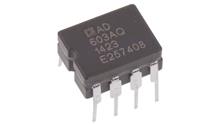
The AD620's low current noise allows it to be used in ECG monitors (Figure 39), where high source resistances of 1 M or higher are not uncommon. The AD620 is an excellent choice for battery-powered data recorders due to its low power, low supply voltage requirements, and space-saving 8-lead mini-DIP and SOIC package offerings.
Furthermore, the low bias currents and low current noise of the AD620, combined with the low voltage noise, improve the dynamic range for improved performance.
Note that the extra circuitry with the AD705J, several resistors, and capacitors here is to ensure that the optimum common-mode voltage (for making accurate measurements) is "applied" to the body being measured. This is accomplished by employing the "right leg electrode." It's also known as the driven right leg circuit.
EEG Sensor Circuit
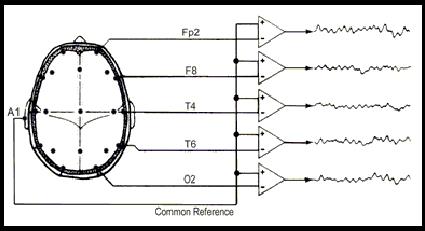
(EEG signals connection with an instrumentation amplifier The magnitude)
Electroencephalogram (EEG) probes are placed on the scalp to measure the electrical activity of the brain. Because the amplitude of the EEG signal is so low (5-500 μV), it is difficult to acquire and measure. As a result, an amplifier is required to boost the signals to a desired or recognizable level.
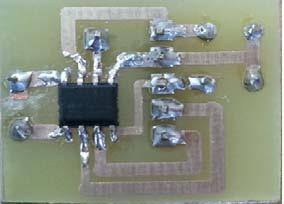
The PCB circuit of the AD620 shown above is used to amplify the magnitude of the EEG, which is less than 100V. The AD620 amplifier's high gains magnify the EEG signal approximately 100 times. The gain formula is shown in the table below.
RG= 100 k/(G 1) (1)
For battery-supplied medical EEG systems especially multi-channel architecture built the AD8327 is also recommended.
AD620 Module User Guide
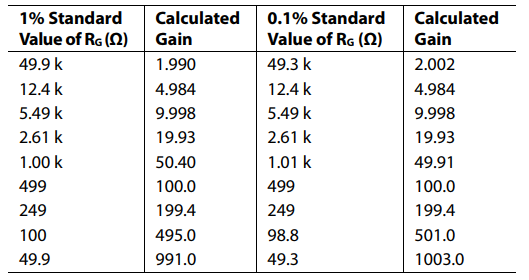
The gain of the AD621 is pin selectable where G = 1 (default) or G = 100 (strap Pin 1 and Pin 8). In contrast, the gain of the AD620, AD622, and AD623 devices is resistor dependent (the resistor is connected between the RG pins). Without a resistor, the gain is unity. For specific gain resistor values, refer to the table below.
AD620 Equivalent/Alternative Parts
Equivalent part: AD623
Alternative part: AD8421, AD623, LT6370, LT1168, LT1167, AD8428, AD8429
AD620 Outline Dimension (8-pin SOIC package)

Download AD620 Datasheet PDF
AD620 Amplifier FAQ
1. Why AD620 is suitable for use in measuring ECG signals?
It"s because the AD620 amplifier has low power consumption, high gain, and low noise.
2. What is an instrumentation amplifier?

(image credit: https://en.wikipedia.org/wiki/Instrumentation_amplifier)
Instrumentation amplifiers are built using a variant of the classic three-op amp design. Absolute value trimming enables the user to precisely program gain with a single resistor. Because of the monolithic construction and laser wafer trimming, circuit components can be tightly matched and tracked, ensuring the high level of performance inherent in this circuit.
Besides, because the instrumentation amplifiers like an AD620 don't have an essential resistor between pin 1 and pin 8 to set the gain its gain is pretty high at low frequencies and DC circuits.
3. What is the difference between AD620 and AD623?
The two parts are interchangeable in most circumstances. They differ from each other mostly in the power supply they support. The AD620 is only suitable for dual supply operation whilst AD623 is capable of both dual and single supply.


 Marshall ·