Introduction
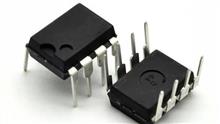
The TL494CN switching regulator incorporates all the functions required in the construction of a pulse-width-modulation (PWM) control circuit on a single chip. It was designed mainly for the control of power supplies. It could provide the possibility of tailoring the power supply control circuitry to use. It includes two error amplifiers with an adjustable oscillator on the chip as well as a dead-time-control (DTC) comparator and a control flip-flop for pulse steering with a 5V, 5percent precision regulator as well as output control circuits. The output transistors that are not committed offer either emitter-follower or common-emitter output capabilities. The TL494CN switching regulator supports single-ended or push-pull output and can be controlled via the output-control function. It is widely used in microwave ovens, washing machines, e-bikes, and as well as smoke detectors.
Features
Complete PWM Power-Control Circuitry
Variable Dead Time Provides Control
Internal Regulator Provides a Stable 5-V Reference Supply With 5% Tolerance
Circuit Architecture Allows Easy Synchronization
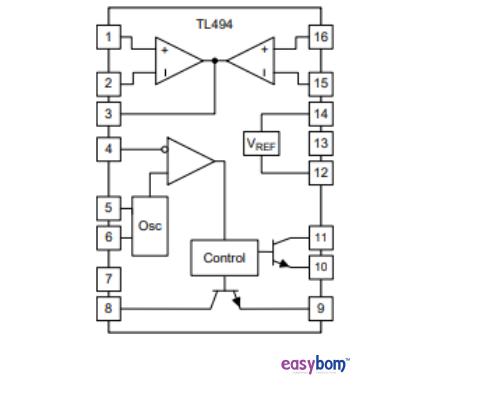
Diagram
CAD Model
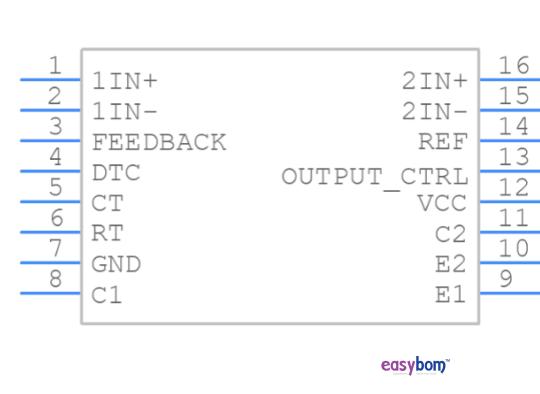
Symbol
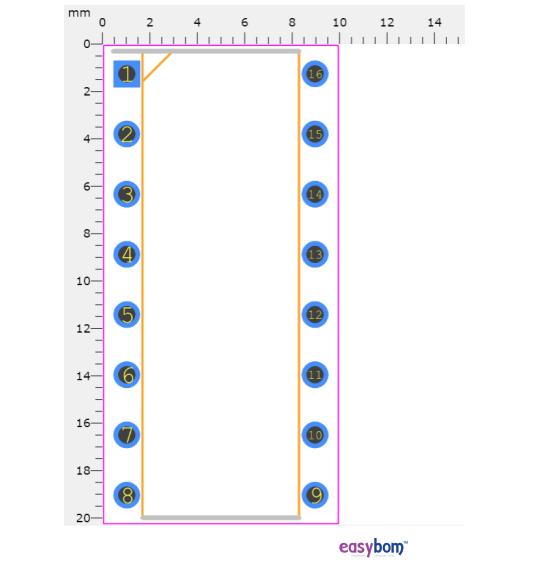
PCB Footprints
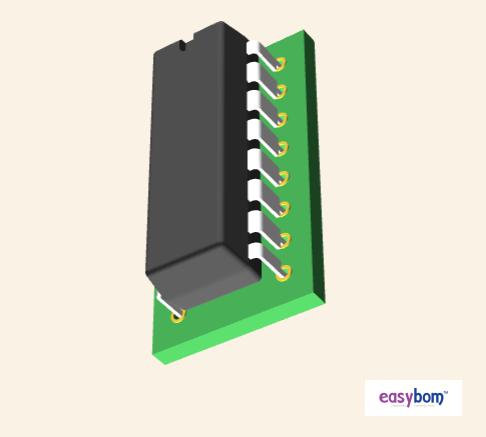
3D Models
Specifications
Supply Chain
Factory Lead Time - 6 Weeks
Physical
Mounting Type - Through Hole
Package / Case - 16-DIP (0.300, 7.62mm)
Technical
Operating Temperature - 0°C~70°C TA
Circuits of TL494CN

Alternative Models
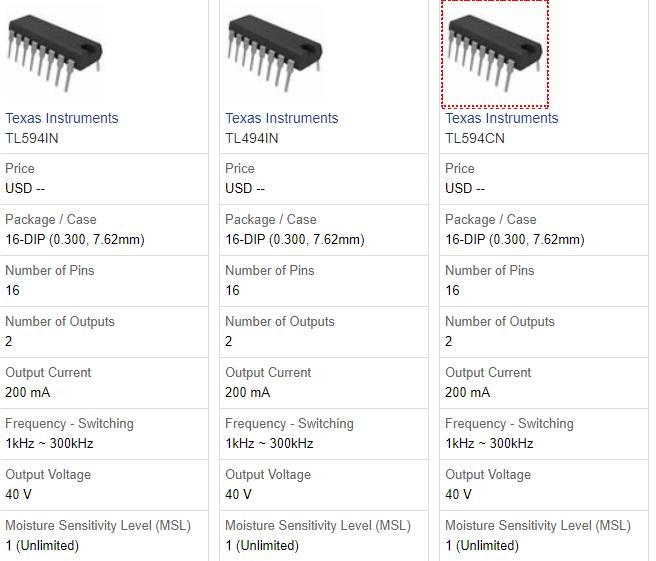
TL594IN, TL494IN, TL594CN
Where to Use TL494CN?
This TL494CN switch regulator is referred to as a high-efficiency energy-saving power supply. It is the direction for development in the stabilized supply of power. The Switched Mode Power Supply can be described as a form of power conversion device comprised of a switch circuit that is controlled via duty rate. The main component of the switching power supply is an electronically controlled switching circuit. Based on the specifications in the power supply's output voltage, or constant present characteristics in the power source the circuit for feedback control as well as the duty cycle controller technique are employed to regulate the circuit that switches. With the constant advancement of technology for control and the component, the efficiency of all aspects of the power supply that switches is continuously improving, and capacity is also increasing.
Control and protection circuits primarily processing signals is part of the "weak current" circuit, however, it is the control circuit inside the switch device. If there is a fault it can cause severe consequences and the power supply is shut off or is damaged. Numerous indicators of the power supply performance, like the stability of the current-voltage and ripple, output characteristics, and more are also connected to the controller circuit. So, the design quality that is present in the TL494CN switching regulator circuit is vital in the performance of the power supply.

How to Use TL494CN?
Its TL494CN moving regulator, also known as the switching regulator, is a sort of voltage regulator. It is an output stage. It can switch repeatedly from "on" and "off" states. In conjunction with energy storage elements (capacitors as well as sensors), it produces the output voltage. The voltage regulator adjusts the switch based on its feedback to the voltage output. In a fixed frequency regulator, by altering the frequency of the switching voltage. This is known as PWM control. In a remote-controlled oscillator or PWM regulator, both the length as well as the frequency pulses that switch remain the same.
Based on the configuration of the switches or energy storage devices the output voltage could be more or less than that of the input. In addition, it is possible that the TL494CN switching regulator can produce different output voltages. Most of the time, Buck switching regulators are more efficient than linear regulators when switching power sources to meet the identical input and output voltage requirements.
Parts with Similar Specs
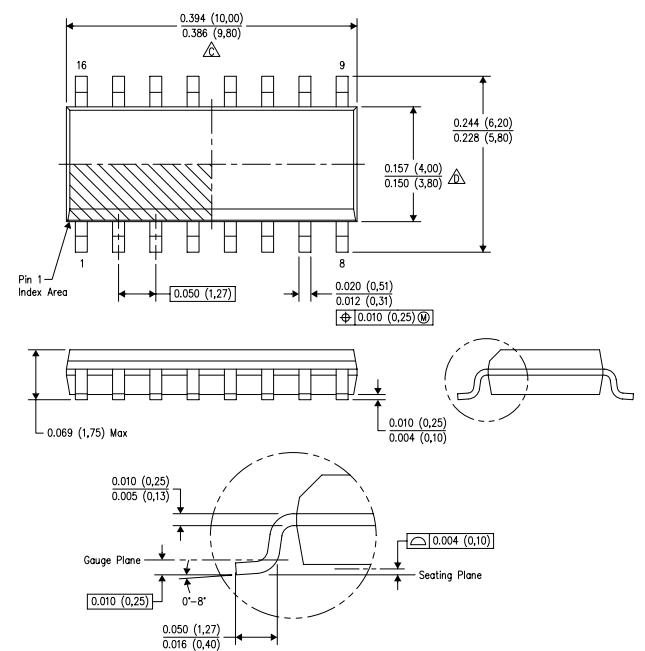
Package Dimensions
About the Manufacturer
Texas Instruments (TI) emerges as a globally recognized semiconductor manufacturer expanded into 35 countries. It has seen rapid growth. In 1958, they first introduced the working integrated circuit. They aspire to solve challenges as well as change the world through their technologies.
Datasheet
https://www.ti.com/lit/ds/symlink/tl494.pdf
Popularity by Region


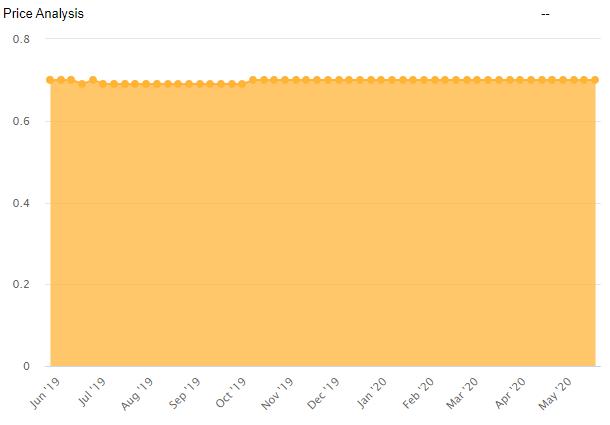
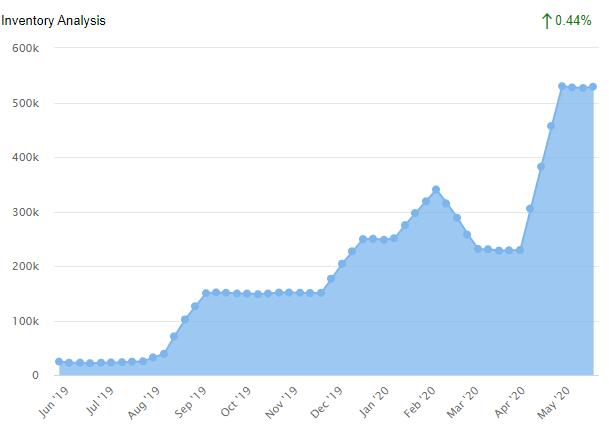
Trend Analysis
Conclusion
The TL494CN switching regulator is designed for operation between 0°C and 70°C. The error amplifiers have common-mode voltages that range between -0.3V, up to VCC 2V. The dead-time control comparator features an offset fixed that gives about 5% dead time. The oscillator on the chip can be eliminated by connecting RT at the reference output and supplying input for a sawtooth to CT or be used to drive common circuits in multiple-rail power supplies that are synchronous.


 Anita ·