How much impact will Russia have on Russia's chip industry if it is subject to international sanctions, including high-tech sanctions, for launching special military operations against Ukraine? Experts believe that a coordinated western technology blockade could deprive Russia of the sophisticated semiconductors needed to power advanced weapons and cutting-edge technologies such as 5G, artificial intelligence and robots.
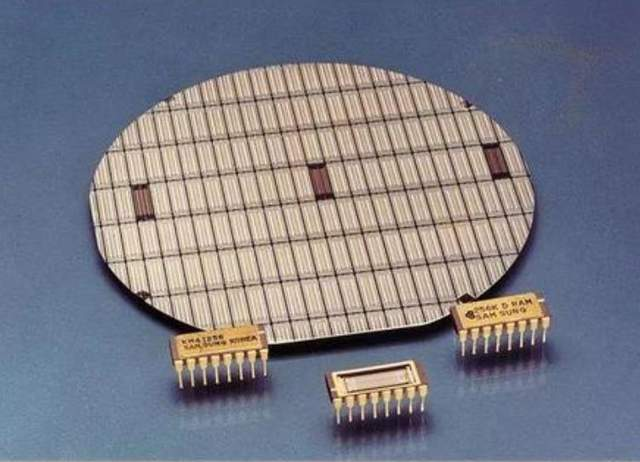
At the end of February, just days after Russia began attacking Ukraine, the United States banned the sale of high-tech products to Russia and its ally Belarus, including semiconductors and telecommunications systems used in the defence, aerospace and maritime industries. The ban also includes certain foreign products produced using American equipment, software or blueprints.
In addition to the US, South Korea, Taiwan, which dominates the field of high-end chips, and Japan, which is powerful in chip manufacturing materials and tools, have also banned exports to Russia of products that have been included in the US export control list.
Their move cuts off Russia's access to many high-end chips and the materials and components needed to reproduce these products locally.
Heavily dependent on imports
Tom Lafferty (Tom Rafferty), regional director for Asia at the Economist Intelligence Unit, a business analysis firm, said the impact of co-ordinated sanctions would be huge for Russia.
The strict export ban will target semiconductors, especially high-end semiconductors, which are almost monopolized by South Korea and Taiwan. As a result, there will be no supply that Russia can rely on anywhere. " He said.
Although sanctions appear to limit Russia's access to chip supplies, the actual impact cannot be fully determined. Russia's Ministry of Industry and Trade and the Ministry of Economic Development had no comment.
At present, Russia still relies heavily on foreign technology to design chips, and its own chip production capacity is limited.
In 2020, Russia imported about $440 million worth of semiconductor equipment, including components such as diodes and transistors, and about $1.25 billion worth of electronic integrated circuits, or "chips," according to the United Nations merchandise trade statistics database.
Although most of these imports come from Asian countries that have not imposed sanctions on Russia, Russia still lags far behind in terms of high-end chips or domestic chips.
Taiwan produces most of the world's cutting-edge semiconductors and the rest in South Korea, according to the Semiconductor Industry Association, an industry group in Washington. South Korea also dominates the field of memory chips, while Japan is home to semiconductor materials and manufacturing tools. Materials and tools are crucial to chip manufacturing.
More than 15 years behind
TSMC is the world's largest chip contract manufacturer. The company said it was committed to complying with the new export controls. South Korea's Samsung Electronics, the world's leading maker of memory chips and electronics, said this month that it had suspended all exports to Russia in view of geopolitical developments and was watching the situation closely to decide what to do next.
Western semiconductor industry executives who have studied the status quo of the Russian semiconductor industry believe that Russian chip manufacturing technology lags behind TSMC, the industry leader, by more than 15 years.
Mikron Group, currently Russia's leading chipmaker, has said it is the only local company capable of mass production of 65nm process semiconductors. You know, 65nm has been introduced into the chip industry for mass production around 2006.
Ikron could not be reached for comment
Moreover, some cutting-edge chips designed by Russia are also assembled by TSMC. Russia may not be able to access some of the chips, although it is not clear whether they will be subject to sanctions.
Lake Baikal (Baikal) microprocessors are widely used in many Russian-made computers and servers. (Baikal Electronics JSC), Russia's Baikal Lake Electronics Co., Ltd., which designed the chip, said it was made by TSMC.
Some of its latest Elbrus microprocessors are also planned to be produced by TSMC, according to documents from the Russian company Moscow Center of SPARC Technologies (MCST).
TSMC declined to comment. Lake Baikal Electronics and MCST had no comment.
Long-term impact
Analysts point out that although international science and technology sanctions take effect immediately, it will take months or even years for Russia's strategic industries to feel the impact of the sanctions. One of these areas is arms sales, which is an important source of Russia's geopolitical influence and income, says Samuel Bendett (Samuel Bendett), a research analyst at the Center for Naval Analysis, a defense research institute funded by the federal government of Virginia.
Russia is the world's second-largest arms exporter after the United States, according to the Congressional Research Service. Russian-made weapons, including advanced air defense systems, radars and missiles, account for about 20 per cent of global arms sales.
Semiconductors for military use are developed with special materials and circuit designs, allowing them to withstand radiation while maintaining performance, according to the U.S. Department of Defense. Improvements in these areas are essential for the next generation of weapons.
In addition, artificial intelligence, high-speed 5G Internet services and robots-technologies has driven in part by advanced chips-have become priorities for Russia to seek economic modernization and diversification in recent years.
Kevin Wolf (Kevin Wolf), a former US Commerce Department official, said that without high-end chips, Russia's technology ambitions could be thwarted. Wolf currently advises companies on export controls at the US law firm Akin Gump Strauss Hauer & Feld LLP. These technology sanctions largely exclude consumer-grade technology products. James Lewis (James Lewis), senior vice president of the Center for Strategic and International Studies, a Washington think-tank, believes that given the cost and technical difficulty, Russia is unlikely to extract chips from consumer devices such as smartphones and reuse them for weapons.


 Candice ·