


KD-KA01
Cecelia is an accomplished electrical engineer with expertise in automation and control systems. She is a natural problem-solver and thrives on developing solutions that optimize performance and efficiency.

The leakage protector, referred to as the leakage switch, is also called the leakage circuit breaker. It is mainly used to protect the electric shock of the person from fatal danger when the equipment has a leakage fault. It has overload and short-circuit protection functions, so it can be used to protect the circuit or motor and can also be used for infrequent switching of the line under normal circumstances.
The leakage protector is installed in the line, the primary coil is connected to the line of the power grid, and the secondary coil is connected to the release in the leakage protector. When the electrical equipment is in normal operation, the current in the line is in a balanced state, and the sum of the current vectors in the transformer is zero (the current is a vector with a direction, such as an outflow direction is "+", the return direction is "-", the currents going back and forth in the transformer are equal in magnitude and opposite in direction, and the positive and negative offset each other).
Since there is no residual current in the primary coil, the secondary coil will not be induced, and the switching device of the leakage protector operates in a closed state. When the equipment shell leaks and someone touches it, a shunt will be generated at the fault point, and return to the neutral point of the transformer (without the current transformer), which causes the current flowing in and out of the transformer to be unbalanced (the sum of the current vectors is not zero), and the primary coil generates a residual current.
Therefore, the secondary coil will be induced, and when the current value reaches the operating current value limited by the leakage protector, the automatic switch will trip and the power will be cut off.
The leakage protector is mainly composed of three parts: the detection element, the intermediate amplification link, and the operating actuator.
① Detection element. It consists of zero-sequence transformers, which detect leakage current and send out signals.
② Amplification link. Amplify the weak leakage signal and form an electromagnetic protector and an electronic protector according to different devices (the amplifying part can use mechanical devices or electronic devices).
③ Operating actuator. After receiving the signal, the main switch is switched from the closed position to the open position, thereby cutting off the power supply, which is the tripping component for the protected circuit to be disconnected from the power grid.
The leakage protector mainly provides indirect contact protection. Under certain conditions, it can also be used as supplementary protection for direct contact to protect against potentially fatal electric shock accidents.
1. The leakage protector is installed at the outlet of the branch line, and the leakage protection plug is installed at the end of each electrical appliance, which belongs to the end installation. Installation and maintenance are more convenient.
2. The difference in leakage
When the leakage protector is installed at the outlet of the branch line, the terminal failure will cause the entire branch circuit to be powered off and there will be no electricity in the home, and the leakage protection plug, when there is a leakage of electricity on the branch or in the line, only the single branch line is not energized, the appliance does not work.
3. The difference in wiring protection
The leakage protector has only live wire protection, while the leakage protection plug has a live wire and neutral wire protection.
4. The difference in leakage current and leakage tripping time:
Leakage protector: I△n=30mA, action time 0.1S, leakage protection plug: I△n=6mA, action time 0.025S. Leakage protection plugs’ rated residual leakage current is smaller, safer, less harmful to the human body, and quick tripping. Protect human life and property.
Its scope of application is AC: 50HZ, rated voltage: 380V, rated current: up to 250A.
The installation of leakage protectors in low-voltage power distribution systems is one of the effective measures to prevent personal electric shock accidents, and it is also a technical measure to prevent electrical fires and electrical equipment damage accidents caused by leakage. However, the installation of leakage protectors does not mean absolute safety, and prevention should still be the main focus during operation, and other technical measures to prevent electric shock and electrical equipment damage accidents should be taken at the same time.
No matter whether the protection is connected to zero or the grounding measure, its protection range is limited. For example, "protection zero connection" is to connect the metal casing of the electrical equipment to the zero line of the power grid and install a fuse on the power supply side. When the electrical equipment touches the shell fault (a phase touches the shell), a single-phase short circuit of the relative zero line is formed. Due to the large short-circuit current, the fuse is quickly blown and the power supply is disconnected for protection. Its working principle is to change the "shell fault" to a "single-phase short-circuit fault", so as to obtain a large short-circuit current cut-off insurance. However, the electrical faults on the construction site are not frequent, and leakage faults often occur, such as leakage caused by equipment damp, excessive load, long lines, aging insulation, etc. These leakage current values are small, and the insurance cannot be cut off quickly. Therefore, the failure will not be automatically eliminated and will exist for a long time. But this leakage current poses a serious threat to personal safety. Therefore, it is also necessary to install a leakage protector with higher sensitivity for supplementary protection.

Cecelia is an accomplished electrical engineer with expertise in automation and control systems. She is a natural problem-solver and thrives on developing solutions that optimize performance and efficiency.
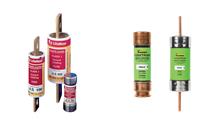
 Marshall · April 29,2022
Remember not long ago we introduced fusible links that are mostly used in automotive alternators? This time we’re going to cover slow blow fuses which are extensively installed for solenoids, transformers, and motors.
Basic Electronics Technology/TutorialsAccess:10692
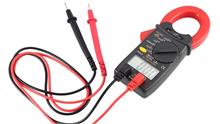
Cecelia · March 26,2022
Clamping means limiting voltage in a circuit, and clamp diodes are diodes used to limit the potential at a certain point in a circuit.
Basic Electronics Technology/TutorialsAccess:12325
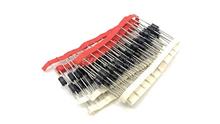
 Laura · March 23,2022
By clamping, transit diodes give great overvoltage protection. They're especially well-suited to protecting voltage-sensitive devices like MOS Technology and low-voltage-supplied ICs because of their quick response to transient overvoltages.
Basic Electronics Technology/TutorialsAccess:1580
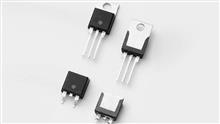
Cecelia · March 02,2022
A thyristor is also known as SCR (silicon-controlled rectifier). Thyristor has the characteristics of a silicon rectifier device, can work under high voltage and high current conditions, and its working process can be controlled. It can be used for controllable rectification, AC voltage regulation, non-contact electronic switches, inverters, and frequency conversion in the circuit.
Basic Electronics Technology/TutorialsAccess:2338
Popular Posts
Hot Labels
Popular Parts